
Gas vs Charcoal vs Pellet Grills: Choosing the Best for You
Posted by United Fireplaces on Aug 19th 2026
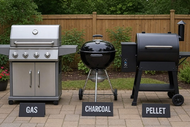
gas vs charcoal vs pellet grills
Gas grills are the easiest choice for fast weeknight outdoor cooking. Charcoal grills deliver the most hands-on flavor. Pellet grills are built for steady low-and-slow cooks with wood smoke. The best grill for you depends less on which fuel is best overall and more on how you like to cook, how much attention you want to give the fire, and whether speed, smoke flavor, or temperature control matters most.
If you are comparing gas vs charcoal vs pellet grills, use this guide to match each option to your cooking style, space, budget, and patience before you buy.
Which grill type is best for your cooking style?
Choose a gas grill if you want quick starts, simple cleanup, and steady heat for burgers, chicken, vegetables, seafood, and weeknight meals. Choose a charcoal grill if you enjoy building a fire, managing airflow, and getting bold grilled flavor from direct heat. Choose a pellet grill if you want steady indirect cooking, wood-smoke flavor, and an easier path to ribs, pork shoulder, brisket, smoked chicken, and long cooks.
That quick answer matters because many shoppers start by looking for the best grills in general. In reality, the right fit comes from your habits. Someone who grills twice a week after work may value speed more than smoke depth. Someone who cooks on weekends may enjoy the slower ritual of charcoal grills or pellet grills.
A simple first filter looks like this:
- Pick gas grills when you want convenience first. They heat quickly, turn off easily, and are simple for repeat everyday meals.
- Pick charcoal grills when you want hands-on control. They reward practice and can produce strong sear heat and classic live-fire flavor.
- Pick pellet grills when you want easier smoking. They use wood pellets and auto feed to hold steady heat with less fire work than charcoal.
The core difference is fuel and fire control
All three grill types cook with heat, but they make and manage that heat in different ways. That changes startup time, flavor, cleanup, temperature range, cooking style, and the feel of the cook.
Gas grills use propane or natural gas burners. You control heat with knobs, much like an outdoor stove. That makes them easy for beginners and useful for cooks who want steady outdoor cooking without tending a fire.
Charcoal grills use lump charcoal or briquettes. You control heat by arranging fuel, opening or closing vents, and moving food between hot and cooler zones. They feel more traditional because the cook is hands on.
Pellet grills burn compressed wood pellets in a fire pot. An electric controller feeds pellets into the fire and helps hold a set temperature. They are often treated as grill-smoker hybrids because they work well for indirect cooking and smoke-forward recipes.
Side-by-side comparison by buying criteria
Instead of asking which option wins every category, compare the same factors across all three grill types. That keeps the choice tied to how you actually cook.
Ease of use
- Gas grills: Best for simple use. Turn the burner on, preheat, cook, and shut it down. They are friendly for beginners and handy for families that grill often.
- Charcoal grills: Most involved. You need to light the charcoal, wait for it to ash over, manage vents, and safely remove ash after cooking.
- Pellet grills: Easy once set up. You load pellets, choose a temperature, and let the controller manage the feed rate, though you still need power and an occasional hopper check.
Flavor profile
- Gas grills: Clean grilled flavor with less smoke by default. You can add smoke boxes or wood chips, but gas is usually not the best choice for deep smoke.
- Charcoal grills: Bold, classic grilling flavor. Charcoal can create strong sear marks, smoky aroma, and a more primal fire-cooked feel.
- Pellet grills: Wood-fired flavor that is usually smoother and more even than charcoal smoke. Pellet choice can shift the flavor, from mild fruit woods to stronger hardwood profiles.
Temperature control
- Gas grills: Very easy to control for direct grilling. Burner changes are quick, and multi-burner models make two-zone cooking easier.
- Charcoal grills: Flexible but manual. Skilled cooks can sear, roast, and smoke, but results depend on fuel amount, airflow, and attention.
- Pellet grills: Strong for steady low and medium heat. They are built to hold a set temperature, which makes long cooks less stressful.
Cooking uses
- Gas grills: Great for everyday grilling. They handle quick proteins, vegetables, kebabs, flatbreads, and simple indirect cooking well.
- Charcoal grills: Highly useful in skilled hands. They can sear steaks, cook hot and fast, roast whole birds, and smoke slowly with the right setup.
- Pellet grills: Great for smoking, roasting, baking, and low-and-slow barbecue. Some models can sear, but many are strongest as indirect cookers.
Cleanup and maintenance
- Gas grills: Usually the easiest day-to-day cleanup. You brush the grates, empty grease parts, and sometimes clean burners and heat shields.
- Charcoal grills: Need ash removal after the fire is fully out. Grates still need brushing, and ash buildup can affect airflow.
- Pellet grills: Need grease cleanup plus ash removal from burned pellets. The fire pot and inside should be kept clean so the grill works safely and well.
Space and setup needs
- Gas grills: Need safe clearance and either a propane tank or natural gas line. Natural gas models may need a more permanent setup.
- Charcoal grills: Can be compact and simple, but they need safe ash handling and good airflow. They are popular for patios and backyards where live-fire cooking is allowed.
- Pellet grills: Need outdoor space plus access to electricity. Pellets also need dry storage because moisture can hurt performance.
Learning curve
- Gas grills: Shortest learning curve. The main skills are preheating, managing hot spots, and using direct and indirect zones.
- Charcoal grills: Steepest learning curve. Fire building, vent control, and fuel layout take practice, but many cooks enjoy that craft.
- Pellet grills: Moderate learning curve. The controller simplifies heat management, but you still need to understand smoke levels, pellet storage, and grease care.
Gas grills are built for speed and convenience
Gas grills are often the most practical option for people who want to cook outdoors without turning every meal into a project. They light quickly, adjust easily, and make it simple to cook after work or while hosting. If your usual menu includes burgers, hot dogs, chicken breasts, fish, vegetables, sausages, or simple steaks, gas gives you a dependable platform.
The strongest advantage is control. You can raise or lower heat quickly, shut off one burner for indirect cooking, and restart the grill without relighting fuel. That makes gas especially useful if different foods need different heat levels at the same time.
Gas is not flavorless, but it is usually less smoky than charcoal or pellets. For some cooks, that is a benefit because delicate foods taste clean and not over-smoked. For others, it means gas needs help from wood chips, smoker boxes, marinades, rubs, or sauces to build a deeper barbecue profile.
Best-fit uses for gas grills include:
- Weeknight outdoor cooking when time is limited
- Frequent grilling for a household or small gathering
- Foods that cook quickly over direct heat
- Cooks who want steady heat without managing fuel by hand
- Patios where ash cleanup would be a pain
Potential drawbacks include:
- Less natural smoke flavor than charcoal grills or pellet grills
- Propane tank refills or natural gas setup needs
- More burner and part care than a simple charcoal kettle
- A cooking feel that may seem less traditional to fire-focused grillers
Charcoal grills deliver classic fire-cooked flavor
Charcoal grills are the choice for cooks who enjoy the process as much as the meal. Lighting coals, arranging heat zones, and controlling vents create a more hands-on link with the fire. That extra work is exactly what some people love and what others want to skip.
Flavor is the main reason many people choose charcoal. The fuel, smoke, dripping juices, and high direct heat can create a savory grilled character that is hard to match with gas. Charcoal also gives you strong searing power when the coals are arranged for intense heat.
The tradeoff is effort. Charcoal takes longer to start, and the heat does not change right away. If the fire is too hot, too cool, or uneven, the cook has to solve the problem with airflow, fuel placement, lid position, or food movement.
Best-fit uses for charcoal grills include:
- Steaks, chops, burgers, chicken pieces, and vegetables with stronger grilled flavor
- Weekend cooks who enjoy tending the fire
- Small patios or yards where a compact grill makes sense
- People who want a lower-tech grill experience
- Cooks interested in learning direct, indirect, and two-zone fire setups
Potential drawbacks include:
- Longer startup and cooldown time
- Ash cleanup after every cook or every few cooks, depending on use
- More hands-on temperature control
- More sensitivity to wind, fuel quality, and vent settings
Pellet grills make smoking more approachable
Pellet grills are popular because they reduce the hardest part of traditional smoking: holding a steady temperature for hours. Instead of feeding logs or adjusting charcoal vents all the time, you set a temperature and let the grill's controller feed pellets as needed. That makes pellet grills appealing to people who want smoked food without babysitting a fire all day.
The flavor is different from charcoal. Pellet smoke is often cleaner and more even, with wood choice playing a clear role. It can be excellent for ribs, pork shoulder, turkey, chicken, salmon, vegetables, and even foods that benefit from gentle heat and smoke.
Pellet grills are not always the strongest option for ripping-hot searing. Some can grill at higher temperatures or include sear features, but the category as a whole shines most when used for indirect heat, roasting, and smoking. If your dream meal is a fast steakhouse-style sear every time, compare specific models carefully before choosing pellets.
Best-fit uses for pellet grills include:
- Low-and-slow barbecue with less fire management
- Long cooks where stable temperature matters
- Wood-smoked chicken, pork, beef, seafood, and vegetables
- Cooks who like digital controls and repeatable steps
- People who want a grill-smoker hybrid for varied outdoor cooking
Potential drawbacks include:
- Requires electricity during use
- Pellets need dry storage
- More moving parts than basic charcoal grills
- May not satisfy cooks who want intense live-fire searing as the main goal

Which option is cheaper to run?
The cheapest grill to run depends on local fuel prices, how often you cook, how long each session lasts, and the grill design. In general, gas can be efficient for quick meals, charcoal can be cheap for simple grilling but uses fuel each time, and pellets can use more fuel during long smoke sessions because they are made to hold heat over time.
Think in terms of your cooking pattern rather than one universal winner. A ten-minute weeknight cook on gas may be more efficient than lighting a full charcoal chimney. A long barbecue session may make pellet use worth it because the value is in temperature stability and smoke, not just fuel cost.
Use this practical cost checklist before buying:
- Fuel availability: Can you easily buy propane, charcoal, or pellets near you?
- Storage: Do you have a dry place for charcoal or pellets, or a safe spot for a propane tank?
- Cook length: Do you usually cook fast meals or long smoked dishes?
- Replacement parts: Are burners, igniters, grates, controllers, or probes easy to maintain or replace?
- Waste: Will ash, grease, bags, tanks, or pellet dust be a pain in your space?
If ongoing simplicity is your priority, gas often feels easiest. If you are okay buying fuel for each cook and cleaning ash, charcoal stays straightforward. If you want smoke-focused cooking, pellet fuel becomes part of the routine and should be planned into your outdoor cooking.
Which grill is best for beginners?
Gas grills are usually the easiest starting point for beginners because they respond quickly and require the least fire knowledge. Pellet grills are also beginner-friendly for smoking because the controller helps manage heat. Charcoal grills are beginner-accessible, but they need more patience and practice before results feel steady.
A beginner should choose based on the food they most want to cook. If you want simple grilled dinners, start with gas. If you want smoked ribs and pulled pork, a pellet grill may be easier than a charcoal smoking setup. If you want to learn the basics of live-fire cooking, charcoal is the best teacher.
Beginner-friendly decision guide:
- Start with your menu. Fast foods point toward gas, smoky barbecue points toward pellets, and flame-forward grilling points toward charcoal.
- Be honest about attention span. If you do not want to adjust vents or watch coals, charcoal may frustrate you.
- Consider cleanup tolerance. Ash, grease, and pellet dust are manageable, but each fuel type creates different chores.
- Think about your space. Electricity, fuel storage, ventilation, and safe clearances matter more than the label on the grill.
- Avoid buying only for fantasy meals. Choose the grill that fits what you will cook most often, not what you may cook once a year.
Flavor comparison without the myths
Flavor is personal, but the differences between grill types are real. Gas gives you clean heat and browning, charcoal adds a stronger combustion note, and pellets add wood smoke in a controlled way. None is always better for every food.
For delicate fish, vegetables, and quick chicken, gas can be ideal because it does not overpower the food. For steaks, burgers, and foods that benefit from a hard sear, charcoal can create a deeper grilled profile. For pork shoulder, ribs, turkey, and foods that soak up smoke over time, pellet grills are especially comfortable.
It also helps to separate smoke from sear. Charcoal is strong at searing and can smoke with the right setup. Pellet grills are strong at smoke and steady roasting, though high-heat searing varies by model. Gas is strong at easy direct grilling, and smoke can be added as a side technique.
Maintenance and durability considerations
Maintenance is where many buyers overlook the real difference between grill types. A grill that is easy to light but annoying to clean may not get used. A grill that makes great food but needs more care may be perfect for one person and a burden for another.
Gas grills need regular grate cleaning, grease care, and occasional inspection of burners, ignition parts, hoses, and heat distribution parts. Keeping the inside from getting loaded with grease helps performance and safety. Covering the grill and protecting it from harsh weather can also extend its life.
Charcoal grills are mechanically simpler, but ash is inevitable. Ash should be removed only when fully cool, and airflow paths should stay clear. Grates, lids, bowls, and vents still need care, especially if the grill lives outside.
Pellet grills combine cooking surfaces, grease systems, ash from burned pellets, electronics, an auger, and a hopper. That does not make them hard to use, but it does mean maintenance is more system-based. Keeping pellets dry and the fire pot clean is especially important for reliable operation.
Decision summary: the best grill is the one you will actually use
The best grills are not always the most complex or the most expensive. They are the ones that match your real habits, taste preferences, and willingness to manage fuel. If a grill fits your routine, you will cook on it more often and get better results over time.
Choose based on these final priorities:
- Choose gas if your priority is speed. It is the strongest everyday option for quick, repeatable meals with minimal setup.
- Choose charcoal if your priority is classic flavor and fire craft. It is the most hands-on and rewarding if you enjoy learning heat control.
- Choose pellets if your priority is low-and-slow consistency. It is ideal for smoke-forward cooking with less manual heat control.
For many households, the gas vs charcoal vs pellet grills choice comes down to time. Gas saves time before and after the cook. Charcoal turns cooking into a more active ritual. Pellets make longer outdoor cooking sessions feel more controlled and easy.
If you still feel split, choose the grill type that fits your most common meal, not your most ambitious one. A convenient grill used every week will usually beat a dream grill that sits covered because it takes too much effort to start.
Q&A
Question: Which grill type should I choose if I mostly cook after work?
Short answer: A gas grill is usually the best fit for weeknight cooking because it starts quickly, adjusts easily, and has the shortest cleanup routine. It is especially useful for burgers, chicken, vegetables, seafood, sausages, and other foods that cook quickly over direct heat.
Question: Is charcoal always better for flavor than gas or pellets?
Short answer: Not always. Charcoal gives a bold, classic fire-cooked flavor and strong searing power, but gas can be better for delicate foods that benefit from clean heat. Pellet grills are often better for steady wood-smoke flavor during longer cooks like ribs, pork shoulder, turkey, and brisket.
Question: Are pellet grills good replacements for traditional grills?
Short answer: Pellet grills can replace a traditional grill for many cooks, especially if smoking, roasting, baking, and low-and-slow barbecue are priorities. However, they are often strongest as indirect cookers, so anyone who mainly wants ripping-hot steak searing should compare specific pellet models carefully.
Question: What maintenance difference matters most between the three options?
Short answer: Gas grills require burner, grease, grate, and ignition care; charcoal grills require safe ash removal and airflow care; pellet grills require grease cleanup, ash removal, dry pellet storage, and care for parts like the hopper, auger, controller, and fire pot. The best choice depends on which chores you are most willing to do regularly.