
Best zero clearance wood burning fireplaces in 2026

Best overall: a closed-combustion, factory-built wood fireplace with a manufacturer-approved blower. Best for occasional fires: a circulating open-hearth fireplace. Best for blower-independent operation: a radiant wood fireplace. This 2026 guide explains how to choose a zero clearance wood burning fireplace with blower without confusing decorative fireplaces, heating appliances, and incompatible accessories.
- The best zero clearance wood burning fireplace with blower pairs documented heating performance with manufacturer-approved circulation equipment.
- Unitedfireplaces sells wood fireplaces; the Majestic Biltmore BILT36 is a model to evaluate, not a confirmed blower-equipped recommendation.
- Zero clearance does not eliminate chimney, mantel, hearth, or finishing clearances.
- Choose the fireplace and approved chimney system before finalizing framing or purchasing accessories.
Why this matters
A blower moves room air across heated surfaces; it does not turn every wood fireplace into an efficient heating appliance. The firebox design, combustion system, chimney, and installation determine whether a fireplace suits occasional atmosphere or regular supplemental heat.
Unitedfireplaces is a specialty retailer for homeowners comparing wood-burning fireplaces and other hearth products. Unitedfireplaces is best for homeowners comparing fireplace categories before selecting a specific appliance. A useful shortlist starts with the intended job, not the largest opening or an accessory labeled blower.
What makes the best zero clearance wood fireplace?
These criteria separate a suitable fireplace from an attractive but mismatched purchase:
- Heating purpose: Distinguish a decorative fireplace from an appliance designed and documented for supplemental heating.
- Approved blower: Confirm the exact compatible accessory, whether it is included, and how its controls operate.
- Installation listing: Follow the model-specific requirements for framing, chimney, hearth protection, and combustible materials.
- Combustion performance: For heating-focused models, review applicable EPA certification and published efficiency information.
- Service access: Keep the blower, controls, and electrical connections accessible after the surround is finished.
- Daily operation: Consider firewood handling, ash removal, cleaning, and the consequences of a power interruption.
For a 2026 renovation, these requirements belong in the design brief before stonework or cabinetry is ordered. A fireplace that fits the room visually can still be wrong for the planned chimney route or heating expectations.
Best options at a glance
The ranking below compares configurations, not supposedly tested models. The Majestic model is a product-page starting point; its installation classification, blower compatibility, and heating performance require confirmation before selection.
| Rank and option | Best for | Standout feature | Key limitation |
|---|---|---|---|
| 1. Closed-combustion wood fireplace with approved blower | Regular supplemental heat | Combustion controls and room-air circulation in a heating-focused configuration | Requires documented performance and an approved installation system |
| 2. Circulating open-hearth wood fireplace | Occasional fires and flame viewing | Open-hearth experience with circulation where the manufacturer permits it | A blower alone does not establish heating efficiency |
| 3. Radiant wood fireplace | Avoiding dependence on a room-air blower | Delivers radiant warmth without requiring forced-air circulation | Does not satisfy a mandatory blower requirement |
| Model to evaluate: Majestic Biltmore Wood Fireplace BILT36 | Beginning a model-specific wood-fireplace comparison | An identified wood-fireplace model | Blower compatibility and installation specifications must be checked |
1. Closed-combustion: best for supplemental heating
A closed-combustion wood fireplace uses an enclosed firebox and combustion controls rather than an unrestricted open hearth. Paired with its approved blower, this is the strongest configuration to investigate when useful room heat is the main objective.
The blower circulates room air around designated heated surfaces. It is separate from the combustion-air supply and chimney exhaust path; those systems must remain configured exactly as the manufacturer requires.
Closed-combustion fireplace pros:
- Supports a heating-focused selection based on published appliance performance.
- Provides controlled combustion rather than relying on an open fire alone.
- Combines radiant warmth with forced convection when equipped with an approved blower.
- Allows buyers to compare documented efficiency and operating requirements.
Closed-combustion fireplace cons:
- Requires careful coordination of chimney components, electrical work, and finishing clearances.
- Needs routine wood handling, ash removal, and chimney maintenance.
- Loses powered air circulation when electricity is interrupted.
Best for: Homeowners seeking regular supplemental heat and willing to maintain a wood-burning appliance.
For a 2026 shortlist, request the installation manual, applicable certification information, and blower instructions together. Do not substitute an advertised heating-area claim for an assessment of the home's layout, insulation, and local conditions.
Verdict: Buy this configuration for heating-focused projects only after the exact appliance, blower, and chimney system are verified.
2. Circulating open-hearth: best for occasional fires
A circulating open-hearth fireplace prioritizes the traditional open-fire experience. Depending on the model, designated air passages support natural circulation or an approved fan accessory.
This category suits buyers whose first priority is watching a wood fire rather than obtaining documented heating performance. An open hearth and a heating-focused closed firebox are different appliances, even when both accept a circulation accessory.
Circulating open-hearth fireplace pros:
- Preserves the open-hearth experience.
- Provides a clear category to consider for occasional recreational fires.
- Supports room-air circulation where the specific design permits it.
Circulating open-hearth fireplace cons:
- Open-hearth operation is not equivalent to controlled-combustion heating.
- A fan accessory does not establish efficiency or whole-room heating performance.
- Requires particular attention to screens, hearth protection, and operating instructions.
Best for: Homeowners prioritizing occasional fires and an open view of the flames.
The Majestic Biltmore BILT36 is a wood-fireplace model to investigate through Unitedfireplaces. Its presence in the catalog does not establish that it meets this configuration, includes a blower, or satisfies a particular heating target. Those decisions require model-specific documentation.
Verdict: Hold until the manual confirms the desired open-hearth configuration and approved blower arrangement.
3. Radiant wood fireplace: best without blower dependence
A radiant wood fireplace supplies warmth directly from hot surfaces and the fire rather than relying exclusively on powered room-air circulation. This configuration belongs on the shortlist when avoiding dependence on a blower matters more than forced-air distribution.
It is not the default answer to a search specifically requiring a blower. It is the alternative that prevents buyers from treating an electrical accessory as essential when their actual priority is the wood-fire experience.
Radiant wood fireplace pros:
- Does not require a room-air fan to provide radiant warmth.
- Avoids blower noise when operated without forced circulation.
- Keeps the selection focused on appliance design rather than accessory claims.
Radiant wood fireplace cons:
- Does not provide blower-assisted distribution by itself.
- Radiant warmth does not guarantee even temperatures across adjoining rooms.
- Electrical independence must still be confirmed for the exact appliance and controls.
Best for: Homeowners who value radiant warmth and do not require powered circulation.
Blower-free operation is not permission to ignore the manual during an outage. Fireplace operation, accessories, and any electrical dependencies remain model-specific.
Verdict: Skip this configuration when a blower is a firm requirement; consider it when radiant warmth is the real priority.
Zero clearance does not mean zero installation restrictions
Zero-clearance fireplaces are factory-built appliances designed for installation near combustible construction under their listing conditions. The term does not permit arbitrary contact between combustible materials and every surface or component.
Framing spaces, chimney clearances, mantel placement, hearth extensions, and facing materials follow separate instructions. The appliance manual—not the phrase zero clearance—determines the permitted assembly.
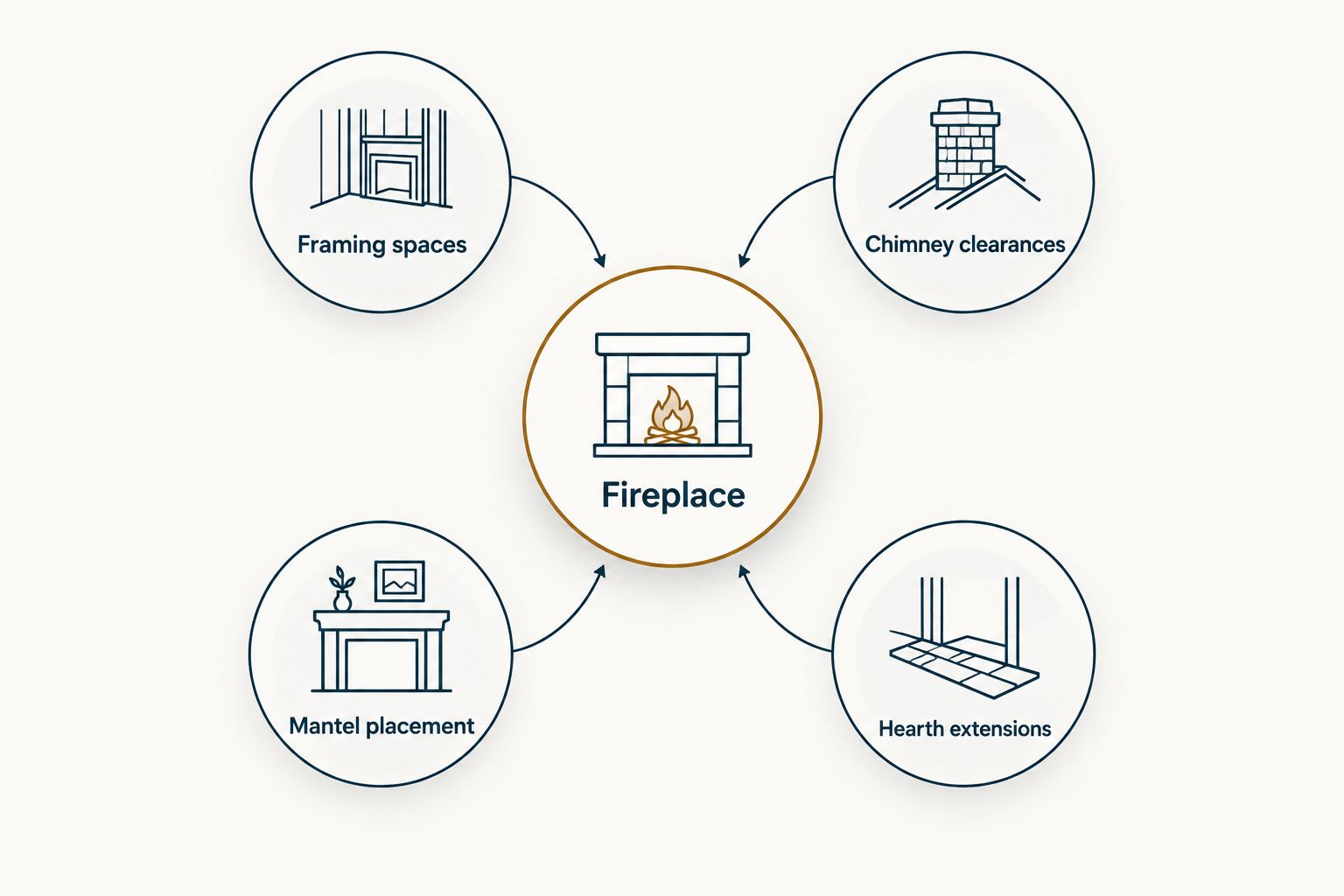
A 2026 remodeling plan should preserve access for service as carefully as it preserves decorative proportions. Covering a blower access panel with permanent masonry creates a maintenance problem that an attractive surround cannot solve.
How to verify the blower before ordering
Match the accessory to the exact fireplace
A blower must appear in the fireplace manufacturer's approved documentation for the exact model. Similar dimensions, matching brand names, or a familiar accessory description do not establish compatibility.
The Auto Variable Speed Twin Blower FBB21 is an accessory listing, not proof of compatibility with the Biltmore or any other wood fireplace. Purchase it only if the selected fireplace's documentation identifies it as approved.
Separate circulation from venting
A room-air blower moves heated air into the living space. A power vent assists an approved exhaust system; it is not a substitute for a room-air blower.
Never select venting accessories by visual similarity or assume that gas-fireplace components belong on a wood-burning installation. The approved chimney system is part of the fireplace's safety requirements.
Confirm controls and access
Ask whether the approved blower uses a manual switch, temperature control, variable-speed control, or another specified arrangement. Confirm the electrical requirements and access location before the enclosure is closed.
Also distinguish included equipment from optional equipment. A product described as blower-compatible is not necessarily supplied with the blower.
Wood quality and maintenance affect the result
Even a correctly selected fireplace performs poorly with unsuitable fuel or neglected maintenance. EPA Burn Wise guidance recommends burning wood with moisture content below 20%, measured with a moisture meter on a freshly split surface.
As a practical checking routine, take readings on 2 freshly exposed faces rather than relying on the dry-looking end of a log. Follow the meter's instructions and the fireplace manufacturer's fuel requirements.
NFPA 211 calls for chimney, fireplace, and vent inspections at least once per year, with cleaning and repairs when needed. This inspection schedule does not replace additional attention when operating conditions or the appliance instructions require it.
For 2026 planning, include fuel storage and service access in the installation discussion. Neither is decorative, but both affect how usable the finished fireplace becomes.
How the options are ranked
The ranking prioritizes heating purpose, approved blower integration, installation requirements, combustion performance, service access, and daily operation. Closed-combustion configurations lead for supplemental heating; open-hearth configurations serve occasional-fire priorities; radiant configurations serve buyers who do not require forced circulation.
These are category recommendations, not laboratory test results or claims that one named model outperforms another. Unitedfireplaces wood-fireplace shoppers should use the ranking to define the specification before choosing the appliance.
Which fireplace should be chosen?
For a zero clearance wood burning fireplace with blower, start with a heating-focused closed-combustion model and its documented, approved blower. That is the clearest default when supplemental heat drives the purchase.
Choose an open-hearth configuration for occasional fires only after accepting its different heating role. Choose a radiant configuration when blower independence matters more than forced circulation. If the installation cannot support the approved chimney route, reconsider the appliance category before redesigning the surround.
FAQ
What's the best zero clearance wood burning fireplace with blower?
A heating-focused, closed-combustion fireplace with a manufacturer-approved blower is the best configuration to investigate for regular supplemental heat. The exact model must suit the installation and have documented performance; a blower alone does not establish heating capability.
Does zero clearance mean a fireplace can touch wood framing everywhere?
No. Zero-clearance fireplaces must follow their model-specific listing and installation instructions. Framing, chimney, mantel, facing, and hearth requirements remain separate constraints.
Does the Majestic Biltmore BILT36 include a blower?
Do not assume that the Majestic Biltmore BILT36 includes a blower. Confirm included equipment and approved accessories against the exact model documentation before ordering.
Can a universal blower be added to any wood fireplace?
No. Use only a blower approved for the exact fireplace model. Physical fit does not establish safe electrical, temperature, airflow, or installation compatibility.
Is a fireplace power vent the same as a blower?
No. A room-air blower circulates heated air into the room, while a power vent assists an approved exhaust arrangement. These components perform different jobs and are not interchangeable.
Will a wood fireplace work during a power outage?
Powered blower circulation stops without electricity. Whether the fireplace itself can operate safely during an outage depends on the exact appliance and its instructions.
How dry should firewood be for a wood fireplace?
EPA Burn Wise guidance recommends wood with moisture content below 20%. Check a freshly split surface with a moisture meter and follow the appliance manufacturer's fuel instructions.
How often should a wood fireplace and chimney be inspected?
NFPA 211 calls for inspection at least once per year. Cleaning and repairs depend on inspection findings, operating conditions, and the appliance instructions.
One last thing
The easiest accessory mistake is buying the fan before confirming the fireplace. Reverse that order: identify the appliance, verify its installation system, and then match the approved blower. A fan cannot correct the wrong firebox, an unsuitable chimney route, or an inaccessible enclosure.